
Key Issues
Vietnam's duck industry faces serious welfare challenges across both meat and egg production systems.
Egg-Laying Ducks
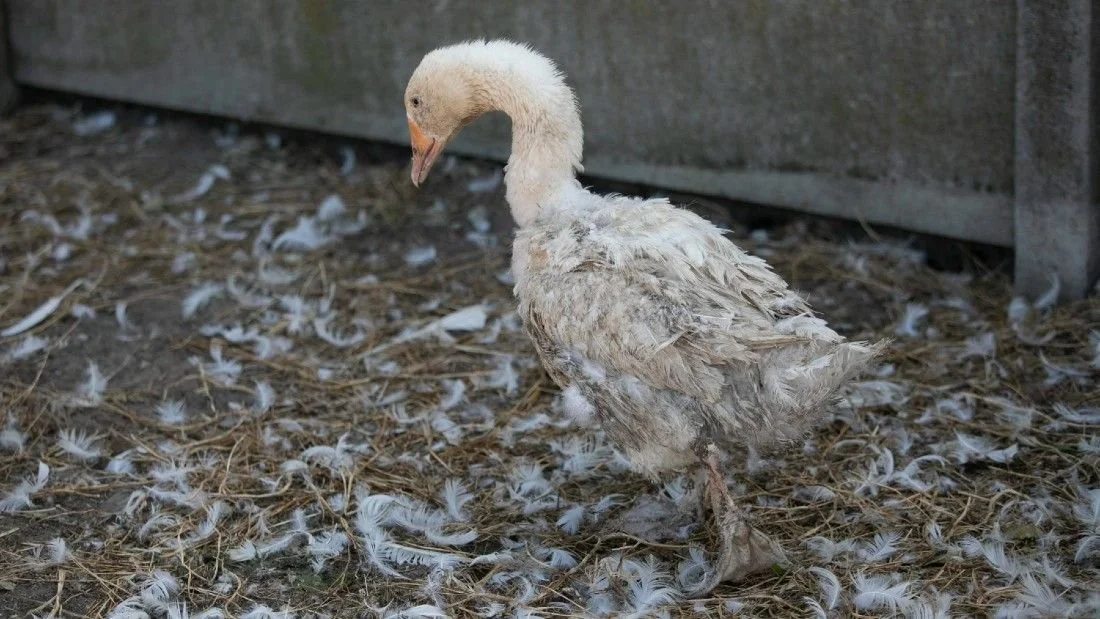
Goose after feather-plucking (Credit: Andrew Skowron)
Live feather plucking is an extremely painful process for ducks. It involves pulling out their feathers by hand while the birds are still alive, tearing tissue and damaging nerves and blood vessels in the process.
Because each feather is connected to sensitive nerve endings, the sudden force of being pulled out causes intense pain. Ducks usually struggle violently, flap their wings, and cry out when this happens, showing clear signs of distress.
After the plucking, the skin and feather follicles remain sore, swollen, and inflamed for days, and open wounds can easily become infected. This means ducks continue to experience burning or throbbing pain long after the procedure.
Live feather plucking
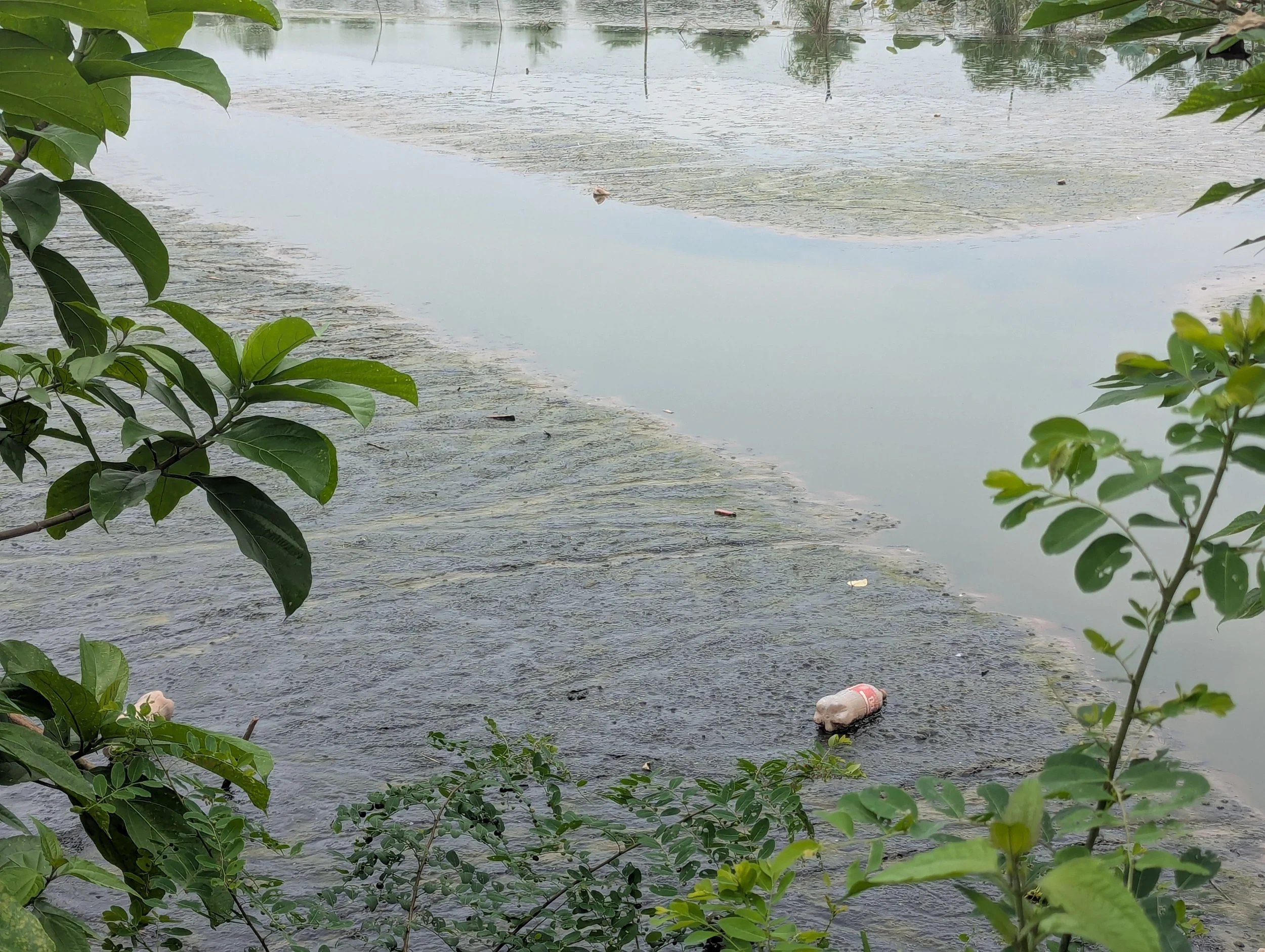
Poorly managed ponds on free-range duck egg farms in Vietnam can fill with waste and decaying matter, creating ideal conditions for harmful bacteria, viruses, and parasites. Diseases can spread easily when ducks drink or bathe in dirty water. Algal blooms can add more toxins, further harming ducks.
Separate sources of clean water for drinking are also rarely provided. Without clean drinking water, ducks ingest pathogens and polluted debris daily, increasing risks of infections, skin or eye irritation, and chronic stress. Sick ducks lay fewer, lower-quality eggs and grow more slowly. Contaminated ponds also act as long-term reservoirs for disease, raising the chance of outbreaks.
Poor water quality
Meat Ducks

Emergence of caged systems
Duck cages in Taiwan (Credit: Jo-Anne McArthur / WeAnimals)
As the duck meat industry intensifies, raising ducks in cold barns with barren environments has become increasingly popular. Even more worryingly, a few farmers are beginning to confine meat ducks in caged systems.
Cages cause both ongoing physical pain and severe mental suffering to ducks. Confined to small, crowded, hard-floored spaces, ducks are unable to move, and rough surfaces lead to injuries like footpad sores. They deprive ducks of opportunities for play, exploration, social interaction, and comfort behaviours, leaving them chronically frustrated, stressed, and bored.
Life in a cage is dominated by pain, deprivation, and the inability to experience joy or satisfaction.
Other Serious Issues
-
The increasingly popular cold barn systems often deny ducks access to water for bathing. This prevents ducks from expressing their most natural behaviours.
Without open water access, ducks face multiple welfare challenges: they cannot properly maintain their eyes, nostrils, and feathers through natural cleaning behaviors, they can develop painful foot pad conditions, and they experience frustration due to their inability to perform their most natural behaviours.
-
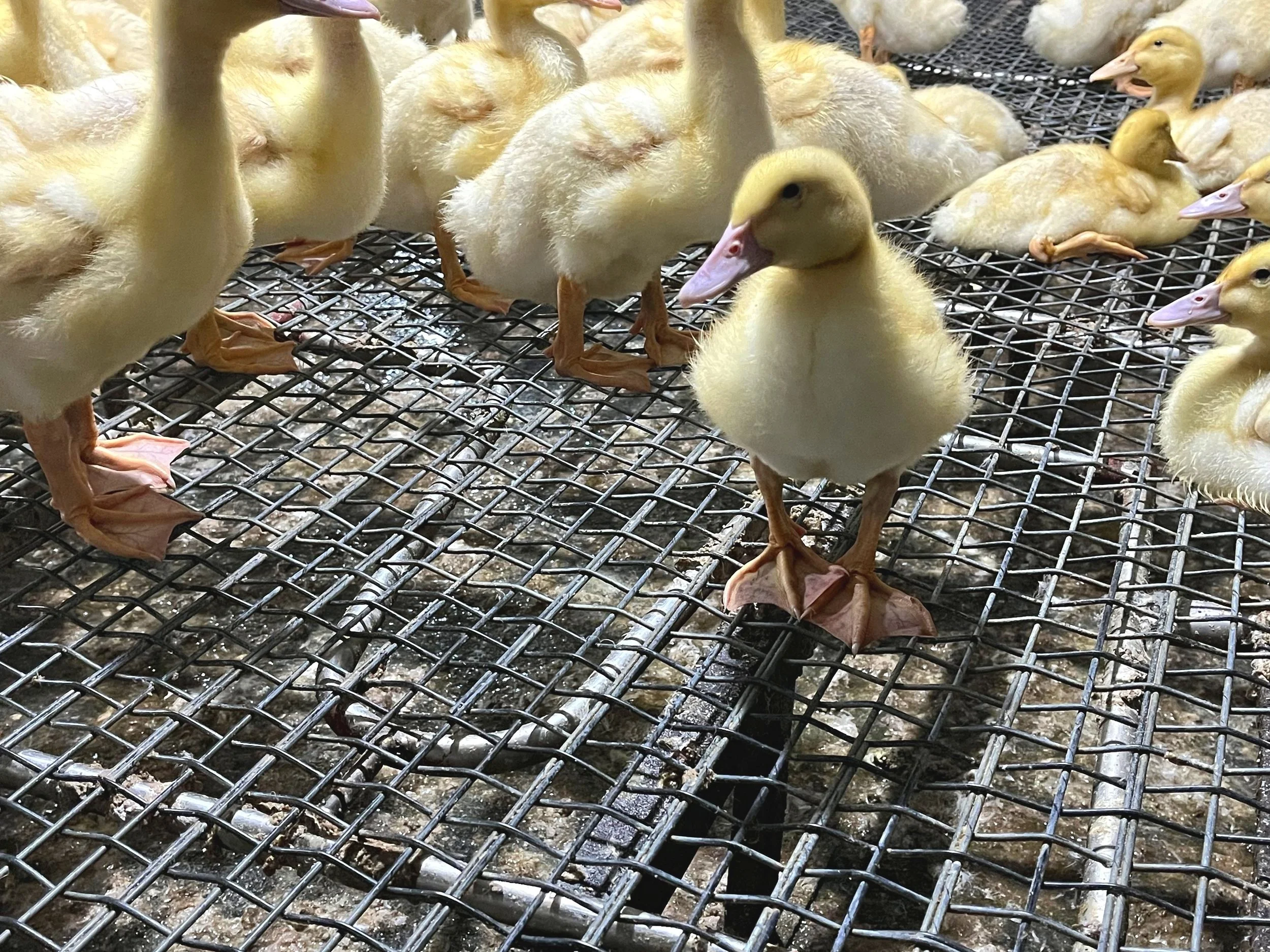
Ducks have webbed feet that are adapted for swimming and walking on soft surfaces.
Even in less intensive farms, ducks often live in barns with wire-mesh or hard metallic/plastic flooring. Prolonged exposure to such hard or abrasive flooring leads ducks to develop painful lesions on their foot pads.
-
It is common for ducks to be slaughtered live at traditional wet markets, like other poultry birds. Modern slaughterhouses are also not commonly used. Instead, small-scale, manual and often unlicensed slaughterhouses are scattered across many areas. These facilities are not inspected and controlled by veterinary agencies meaning there is little compliance to any hygiene or food safety regulations.
With lack of sufficient equipment, ducks at these small facilities and wet markets are not stunned before being slaughtered. They remain fully conscious during neck cutting or decapitation, leading to horrifically intense and acute pain before death.
-
It is common practice amongst smaller players to overcrowd live birds on extremely small vehicles, including motorbikes. Even larger trucks designed for transportation of poultry are extremely cramped, unhygienic and do not provide ducks with feed or water, which can lead to high levels of psychological and heat stress.

Read Our Scoping Report
Our Scoping Report is the first comprehensive review of welfare issues in Vietnam's duck industry, covering the full landscape of challenges, stakeholders, and opportunities for change.